Riggins Forest Entomology Lab
Welcome to the webpage for the Forest Entomology Lab at Mississippi State University, led by Dr. John J. Riggins Donate
Meet the Team
Current Members
Professor of Forest Entomology
John J. Riggins, Ph. D.
Dr. Riggins is originally from Nebraska. He received a B.S. and M.S. in Biology from the University of Nebraska at Kearney. During his time there he studied tiger beetles, carrion beetles, and below-ground invertebrates of wet meadows along the Platte River. He received a Ph.D. in Forest Entomology under Dr. Fred Stephen at the University of Arkansas in 2008. His research in Arkansas used traditional field ecology and modern geospatial techniques to investigate an outbreak of the red oak borer in the Ozark mountains. His current research investigates how disturbances and symbioses influence forest biogeochemistry. In his spare time, Dr. Riggins spends as much time as possible with his wife, Erika and his children Ian, Isaac, Zoey, and Max. He also enjoys hunting, fishing, camping, hiking, and reading.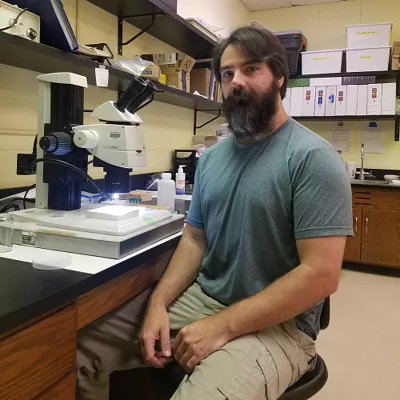
Lab Manager / Research Technician
John W. Thomason
John is a Mississippi native born and raised in Vicksburg. He went into the work force after high school as a deckhand on the Motor Vessel Dredge Jadwin for the U.S. Army Corps. of Engineers. Later he began to pursue a career in the ecological sciences. He received his B.S. in forestry with a concentration in wildlife management from Mississippi State University graduating magna cum laude in spring of 2014. His research under the guidance of Dr. Riggins is focused on the early colonization process (dispersal & host selection) of the southern pine beetle (Dendroctonus frontalis). He has recently taken over the reigns as lab manager, and assists with all aspects of research ongoing in the lab. In his spare time, John enjoys hunting, fishing, camping, and working with the youth of his church.
POST-DOCTORAL ASSOCIATES
Natalie A. Clay, Ph.D.
Natalie received her Ph.D. from the University of Oklahoma Biology Department in 2013 in the Ecology and Evolutionary Biology program after earning a B.A. magna cum laude double majoring in biology and art from Colby College. Natalie brought a wealth of knowledge in ecosystem ecology, nutritional ecology, and community ecology. Dr. Clay is an Assistant Professor of Biology at Louisiana Tech University .
PH.D. STUDENT
Dr. John Formby
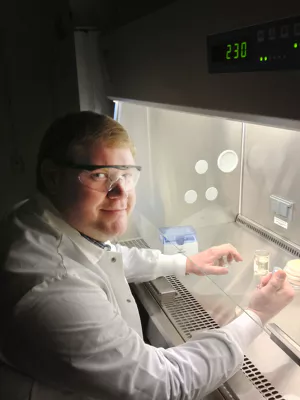
Dissertation Title: Invasion potential and overwintering biology of the Redbay Ambrosia Beetle (Coleoptera: Curculionidae) in the United StatesJohn graduated in 2016. He is now a forest entomologist with the USDA Forest Service, Forest Health Protection in New Mexico .
PH.D. STUDENT
Dr. Nathan Little
Dissertation Title: Implications for the detection, utilization, and degradation of bark beetle-attacked southern pines by subterranean termites. Nathan graduated in spring of 2013. He is now a research entomologist with the Stoneville, MS. USDA ARS .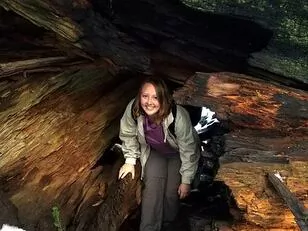
M.S. Student
Kristy McAndrew
Thesis Title:
Acoustic analysis of saproxylic arthropod diversity in
North and Central American pine forests
Kristy graduated in spring of 2021 (congratulations!!) and is now a Ph.D. student in the Ward Lab .
Kristy graduated in spring of 2021 (congratulations!!) and is now a Ph.D. student in the Ward Lab .
M.S. Student
Matthew Thorn
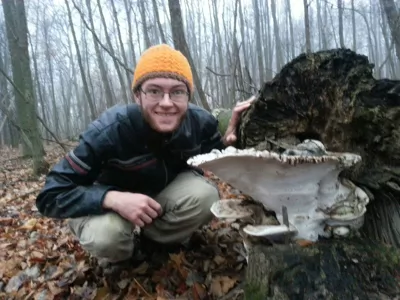
Thesis Title: Recreational firewood movement as a vector of non-native woodborers in MississippiMatt graduated in 2017, and currently works for the Columbus Air Force Base. as the Natural Resource Manager.
M.S. Student
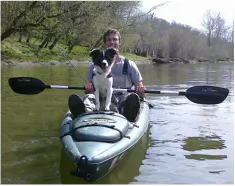
Dr. Kevin Chase
Thesis Title: Forest stand preference of Sirex nigricornis, and Sirex noctilio hazard in the southeastern United States.Kevin graduated in 2013, and is currently a research entomologist with Bartlett Tree Experts at their headquarters in Charlotte, North Carolina.
M.S. Student
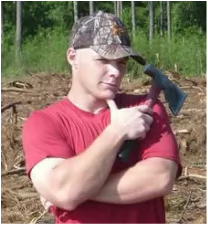
Nathan Blount
Thesis Title: Field survey of native and non-native subterranean termites in southeastern United States forests.Nathan Graduated in Spring of 2012, and is currently a Wildlife Biologist for Mississippi Department of Wildlife, Fisheries, and Parks.

M.S. Student
Ryann Campbell
Thesis Title: Prey specificity of Thanasimus dubius between latent and intermediate phases of southern pine beetle.Ryann graduated in 2011 as the Lab's first graduate. She became a sales rep for Animal Health International.

UnderGraduate Research Scholar
Dutton Day
Dutton was awarded a College of Agriculture and Life
Sciences/MAFES Undergraduate Research Scholarship to
conduct research on the effects of blue stain fungus on
the biodiversity of invertebrate decomposers in Honduras,
Mississippi, and Arizona. He is now pursuing a career as a
dentist at the University of Mississippi Medical Center
School of Dentistry
.
UnderGraduate Research Scholar
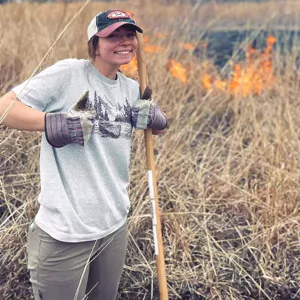
Jessica Tomasi
Jessica was awarded a College of Agriculture and Life
Sciences/MAFES Undergraduate Research Scholarship to
conduct research on the effects of blue stain fungus on
termite presence in dead wood. She then began another
2-year undergraduate research project with Dr. Mark
McConnell assessing various management practices on native
warm season grasses for northern bobwhite quail. She
is now a Farm Bill Biologist with Quail Forever in
Alabama.

UnderGraduate Research Scholar
Vaughn Hamill
Vaughn was awarded a College of Agriculture and Life
Sciences/MAFES Undergraduate Research Scholarship to
conduct research on assessing the use of ecoacustical
recordings to measure invertebrate diversity and richness
within logs. He is currently the lab manager /research
assistant for the Veterinary Diagnostic Lab - Molecular
R&D section at Kansas State University, and plans on
attending graduate school for Geological/Earth/Space
science.
UnderGraduate Research Scholar
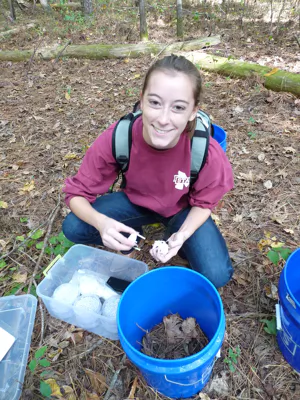
Lauren Gamblin
Lauren was a horticulture major originally from Ohio, and was awarded a College of Agriculture and Life Sciences/MAFES Undergraduate Research Scholarship to conduct her research on phenology and community ecology of leaf litter invertebrates and their role in wood decomposition of southern forests. Additionally, she was awarded a Garden Club of America scholarship in Spring, 2015 to expand this research.Research
We explore a broad spectrum of forest entomology research opportunites.Multiple Discipline Approach
Field Ecology
Geospatial Techniques
Mycology
Eco-Physiology
Invasion Ecology
Biotic Interactions &
Ecosystem Services
Ecosystem Services
Invasion Biology
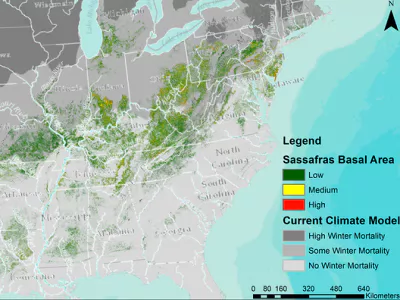
Invasion biology is the study of species introductions into
new geographic regions that were previously disjunct from
existing populations. These introductions often lead to
adverse changes in ecological and economical processes. For
instance, laurel wilt disease threatens to wipe out the
Lauraceae family of trees in North America, affecting the
culinary industry and native fauna. Some of our projects
involving laurel wilt include: genetically linking
established populations to a single introduced clonal
beetle; determining the supercooling point for the beetle;
and developing range expansion maps based on host range,
beetle biology, and climate change.
Plant/Insect/Fungus Interactions
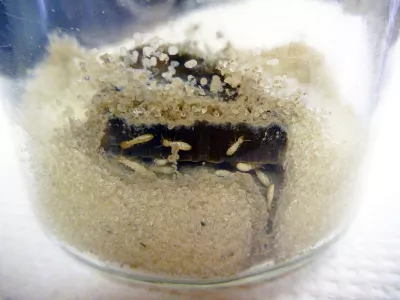
Plants, insects, and fungi are often involved in complex
symbiotic relationships between one another. These
interactions are often key drivers of ecosystem function,
but are usually poorly understood. Ongoing research in our
lab investigates how fungal associates of bark beetles
influence the brown food web, wood decomposition, and
ultimately the terrestrial carbon cycle following bark
beetle epidemics.
Disturbance Ecology
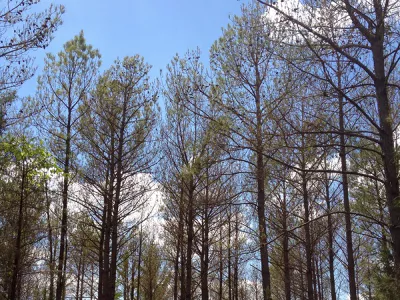
Forest ecosystems experience periodic disturbances from
fire, storms, diseases, and insect outbreaks. These
disturbances drive forest succession and can impact forest
sustainability and ecosystem services. Some of our
disturbance ecology research includes: how drought may
affect the European woodwasp in its native and introduced
ranges; how bark beetle outbreaks affect wood decomposition
and carbon flux in arid, tropical, and sub-tropical forests;
the effects of prescribed burning on native and non-native
ambrosia beetle abundance; and how silvicultural practices
affect arthropod diversity and ecosystem services in
longleaf pine forests.
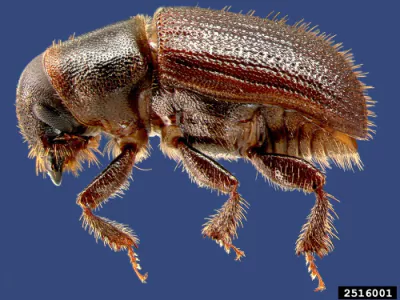
Integrated Pest Management
Integrated pest management (IPM) is the science behind using
the best possible combination of control strategies for a
given pest. Implemented strategies should optimize control
of target pest, minimize impacts to forest ecosystems, and
reduce costs for land managers. Insect life history,
toxicology, insect/tree interactions, pheromone responses,
and numerous other details provide the foundation for IPM.
Some of our IPM projects include: evaluating southern pine
beetle (SPB) trap deployment timing; implementing lethal
trap trees for SPB control; or improving attractiveness of
termite bait stations with the use of blue stain fungi.



Pictures



Teaching
Courses
EPP 3124 Forest Pest Management
EPP 8881
Entomology & Plant Pathology Colloquium
Innovative Education


Job Opportunites
Seeking
Post-Doctural Associate
Ph. D. Student
Emerging needle pathogens are affecting loblolly pine forests in
the Southeastern USA.
We invite you to consider joining our team in the investigation of these pathogens.
We invite you to consider joining our team in the investigation of these pathogens.
Click
here
for announcement PDF of both positions
Get In Touch


"The views and opinions expressed herein are strictly those of
the page author or organization. The contents of this page have
not been reviewed or approved by Mississippi State University."